
V-Day Emerges from the Stories
The Vagina MonologuesThis thread follows the transformation of The Vagina Monologues from a traveling performance into an organized campaign against violence toward women.
increasing Bearing strength in each event
 decreasing
Bearing strength in each eventdecreasingStories After the Show
Stories After the Show
Audiences speak back
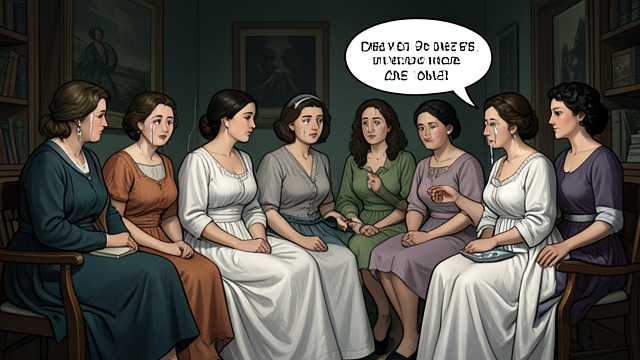
After performances in city after city, women waited to talk with Ensler about their lives. They described rape, childhood sexual abuse, domestic abuse, and fear, often experiences they had seldom shared openly.
The accounts accumulated until Ensler felt that a door had opened onto a hidden world. What had seemed at first to be a work about intimate bodily experience was also bringing her into contact with violence and its aftermath.
From listening to urgency
Ensler came to see the stories not as disconnected tragedies but as evidence of a larger failure to protect women. She concluded that ending violence had become more important than treating the performances as an artistic undertaking alone.
That recognition changed the direction of the work. The act of listening now carried an obligation to respond, and the growing audience offered a possible way to make the issue more visible.
An Organizing Meeting
An Organizing Meeting
Finding collaborators
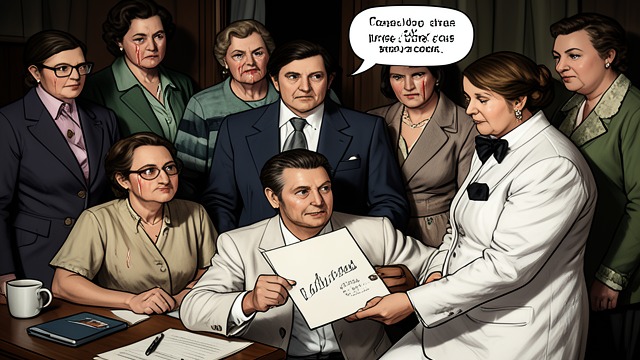
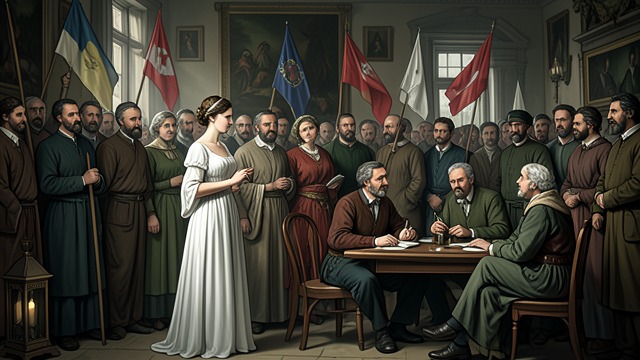
In 1997, Ensler met with activist women, many associated with Feminist.com. They recognized that their goals overlapped with her desire to stop violence against women, and their discussions led to the formation of V-Day.
The new effort grew out of collaboration rather than a plan devised by one person alone. The meeting joined artistic work to organizing, making room for people who could help bring performances and related action into communities.
A new purpose
V-Day took shape as a movement intended to raise awareness and support work against violence. The play supplied a powerful public centerpiece, but the purpose now extended beyond staging a successful production.
This shift established the central premise of the campaign: performance could gather attention, and that attention could be directed toward organizations addressing violence in practical ways.
The First V-Day
The First V-Day
A public launch
On February 14, 1998, the first V-Day event brought a large crowd to the Hammerstein Ballroom in New York City. The benefit centered on a performance of The Vagina Monologues and drew performers and audience members into a highly visible event.
The evening turned Valentine’s Day into a platform for confronting violence against women. Its scale and public energy showed that the work could attract attention beyond people already involved in feminist activism.
From event to movement
The event raised money and helped launch V-Day as an ongoing movement. Ensler describes it as both practical and difficult to explain: participants did the groundwork, but the larger momentum seemed to exceed any one person’s control.
The first gathering therefore served as proof of concept. A performance could bring people together, make a difficult subject publicly unavoidable, and generate resources for organizations working on the issue.
A Worldwide Network
A Worldwide Network
Expanding the format
After the first event, V-Day grew through benefit productions and local initiatives. A major event at the Old Vic in London in 1999 was followed by activities in additional cities and at colleges in 2000.
The format could be adapted to different communities while retaining the play as its central performance. Local participants chose how to organize events and which organizations in their own areas should benefit.
Publicity and fundraising
The movement’s events drew new audiences and raised substantial funds for organizations addressing violence. The book describes support for grassroots groups working in different regions and under markedly different conditions.
This expansion gave the movement a structure that connected public visibility with local action. Rather than relying only on a single high-profile production, it multiplied events and placed the work in the hands of communities around the world.
A Continuing Campaign
A Continuing Campaign
A movement with an explicit mission
The closing appeal defines V-Day as a movement, a vision, and a catalyst: it seeks to end violence against women by raising awareness and supporting organizations that work for women’s safety.
The campaign’s name carries a promised transformation. Valentine’s Day is declared V-Day until violence ends; afterward, the day is imagined as Victory Day.
Action beyond the stage
The book describes V-Day as relying heavily on volunteers and distributing funds to grassroots and field organizations. It identifies a practical infrastructure for the effort while stressing that the movement depends on people bringing events into their communities.
The closing invitation makes participation the next step in the story. The artistic work created a gathering point, but the campaign’s intended resolution lies in sustained public action and the eventual end of violence.
As Ensler traveled with the play before 1997
1997
February 14, 1998
1999 through 2000
At the book’s closing appeal for the 2001 initiative
